

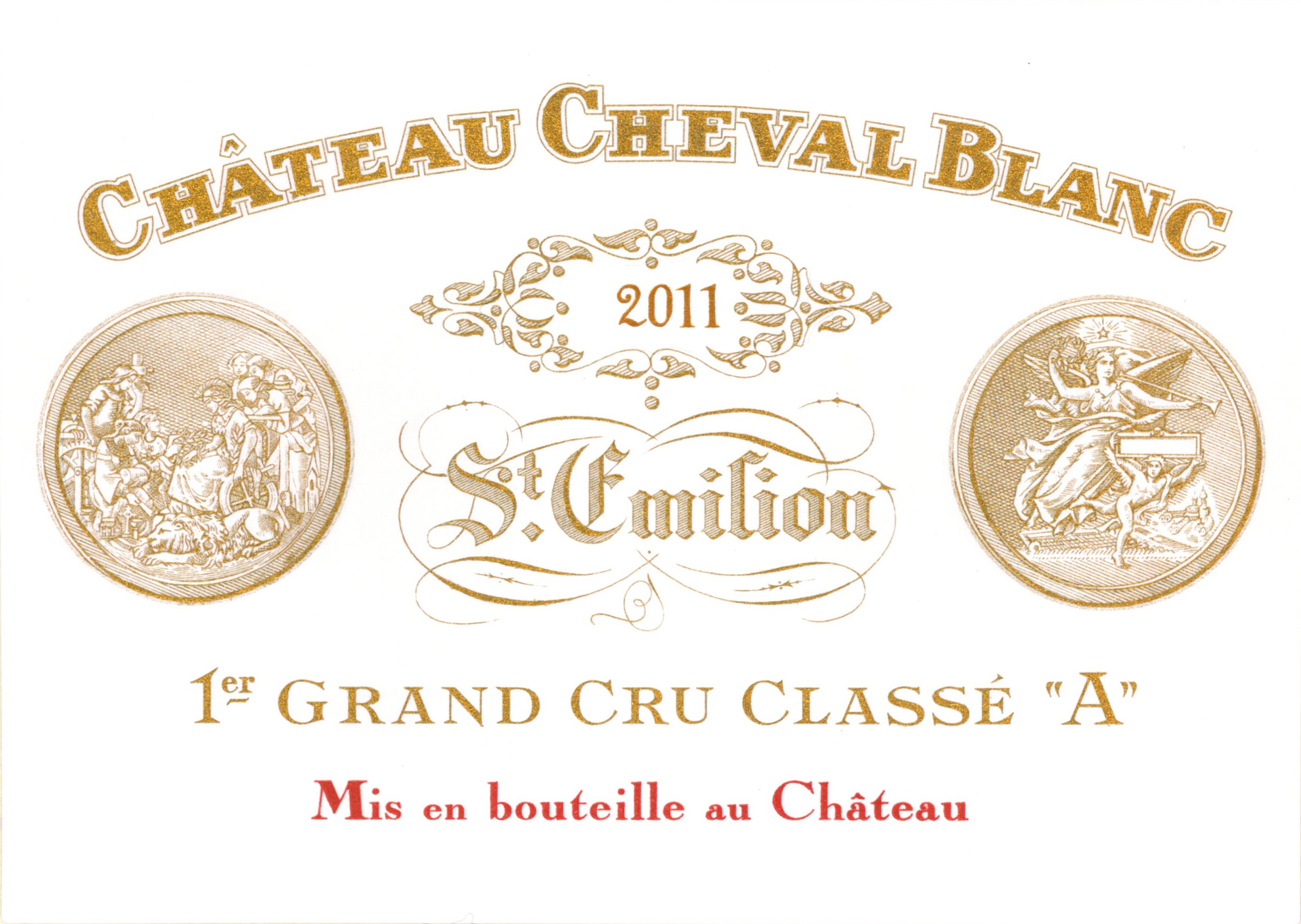
2011 Château Cheval Blanc Saint-Émilion Grand Cru
| Country | France |
|---|---|
| Region | Bordeaux |
| Appellation | Saint-Émilion Grand Cru |
| Winery | [L&A] Château Cheval Blanc |
| Vintage(s) | 2011 |
| Color | Red |
| Varietal(s) | Merlot 60%, Cabernet Franc 40% |
| Country | France |
|---|---|
| Region | Bordeaux |
| Appellation | Saint-Émilion Grand Cru |
| Winery | [L&A] Château Cheval Blanc |
| Vintage(s) | 2011 |
| Color | Red |
| Varietal(s) | Merlot 60%, Cabernet Franc 40% |
Be the first to review this wine!
| Closure | N/A |
|---|---|
| Volume | 750ml |
| Alcohol | 14% |
| Product Code | 6CB-4SEGC11 |
| UPC | 4571642990074 |
| Inventory | Sold Out |
Tasting notes
The colour is a deep crimson. The first nose immediately reveals the wine’s complexity. The aromatic expression combines hints of violet and peony which develop towards notes of summer fruit, raspberry and black cherry. This stylish vintage boasts aromatic freshness, precision and clarity. On the palate the attack is rounded and ample. The middle palate is full and fleshy, with an exceedingly long-lasting finish. The tannins are elegant and silky, creating perfect balance on the palate. This wine leaves a highly aromatic impression of fruit and freshness.
Vintage Notes
WEATHER CONDITIONS
The vegetation period lasting from 1st April to 3rd September was warm and dry, in particular in April, May and June. On 26 and 27 June for example, temperatures
reached 37.8°C. This very hot, sunny weather caused a few incidents of heat damage. July was cool, with average rainfall, while August was quite hot with higher than average rainfall (78mm against the norm of 64mm). The exceptionally hot, dry September allowed us to pick the grapes in optimum conditions.
QUALITY OF THE VINTAGE
Several factors contributed to the quality of the 2011 vintage. The hot weather led to early yet complete ripening of the grapes. The water stress brought early growth to a halt and limited the size of the grapes on soils with low or medium water reserves (gravel and clay). The August rains penalised the vintage’s potential slightly, particularly on the sandy soils where the vines were not yet in a situation of water stress. The later-ripening Cabernet Franc suffered less in August and was able to reach its full potential in the beautiful September weather. The exceptional event was the fact that the Cabernet Franc grapes were sweeter, less acidic and had less total phenolic compounds than the Merlot.
Viticulture
THE VINE CYCLE
The budburst came fairly early: 26 March for the Merlot and 29 March for the Cabernet Franc. Flowering occurred extremely early, on 12 May for the Merlot and 17 May for the Cabernet Franc, due to the very high temperatures in April andMay.Mid-veraison was observed on 17 July for the Merlot and 24 July for the Cabernet Franc. This was the earliest ever recorded at Cheval Blanc. The cool month of July and the rainy August resulted in a fairly slow, gradual ripening process. So while the harvesting dates were quite early they were less so than in 1997 and 2003. The excellent weather conditions in September allowed the grapes to attain optimum ripeness on each plot.We were thus able to stagger the harvesting over more than three weeks, from 6 to 28 September. The early drought caused a halt in the growth of the earliest branches on the gravel plots between end June and mid-July. On the clay soils growth stopped at the end of July. The rainy month of August maintained growth on the sandy soils through to mid-September. The pressure of vine disease such as mildew was extremely low until July, picking up slightly at the end of the season due to the August rainfall. The vines opened out generously and most of the plots required thinning. The final yield was slightly higher than the ten-year average.
COMPOSITION OF THE RIPE GRAPES
The weight of the ripe grapes was slightly below average. This is a concentration factor which varies greatly from one soil type to the next. Sugar contents at ripeness were lower than the average over the period 2004-2011 for the Merlot. An almost unheard-of event occurred: the Cabernet Franc grapes had higher sugar content at ripeness than the Merlot. The Cabernet Franc is a laterripening variety than the Merlot and this year was able to make the most of the highly favourable conditions in September. Ph levels were relatively low inthe Merlot and higher in the Cabernet Franc. Malic acid content was low in both varieties, indicating very good ripeness. On the gravel and clay soils, the grapes were richer in phenolic compounds than the average over the period 2004-2011, which is logical given the low weight of the grapes. On the sandy soils the values were close to the long-term average. But we were below the record values of 2010.